Blog
How Sports Photography Shaped the Way I Photograph Families
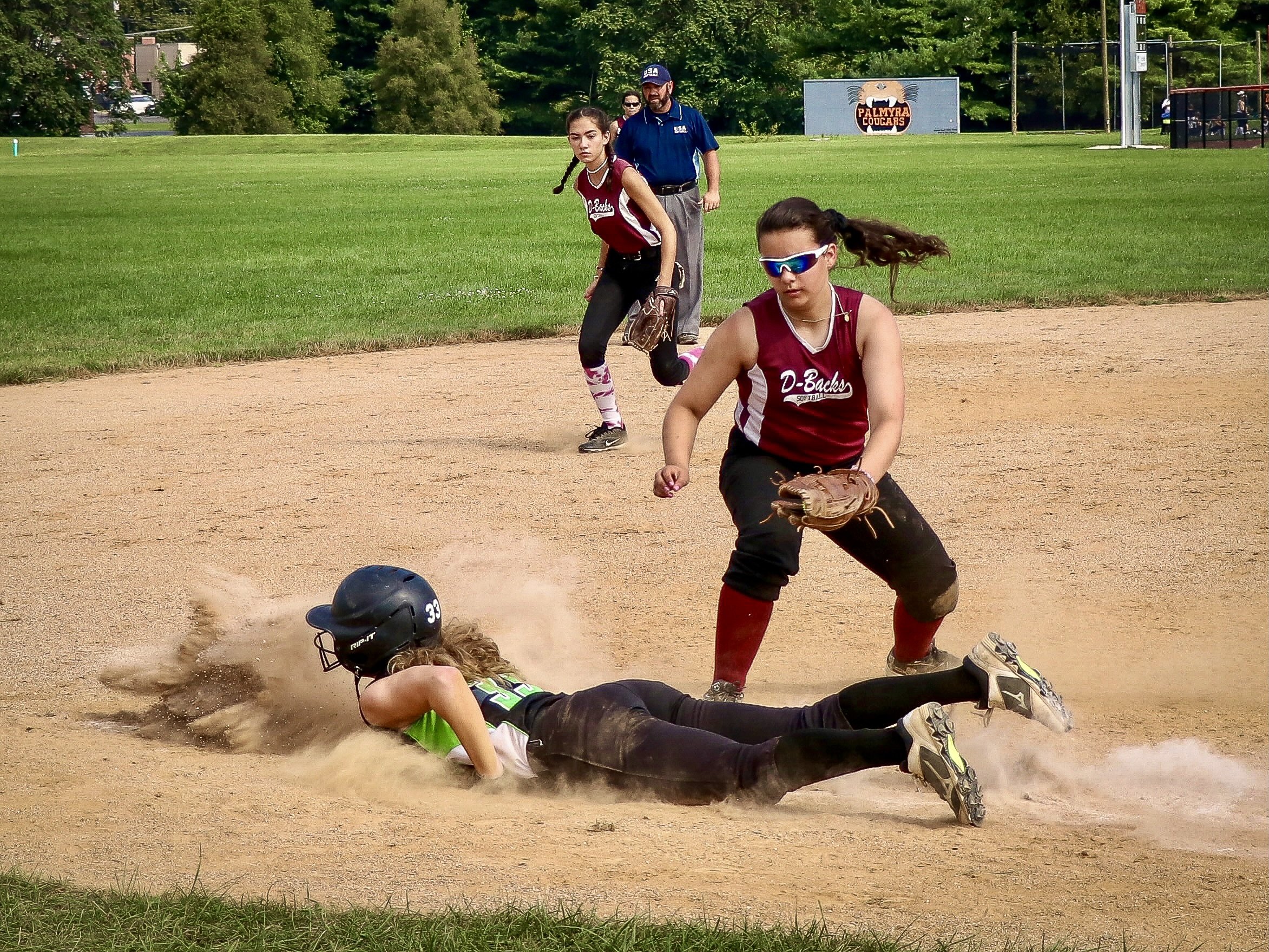
Eleven years ago, I became the default photographer for my daughter's softball team. No business. No website. Just a camera and a spot along the fence.
Then other parents asked if I'd shoot their kids' games too. Baseball, football, volleyball, eventually running. My late father introduced me to photography, but it drifted in and out of focus for years. Sports is what brought it back.
Here's what the sidelines taught me.
You can't ask for a do-over. A runner doesn't loop back to cross the line again. A swing happens once. You learn to read the moment before it arrives, so you're ready when it does.
Effort shows on a face. Nobody fakes the mile that's harder than the last one. That honesty is what I look for in every photo, on a field or off it.
The best frames aren't posed. Nobody poses a slide into home. The photo works because it's real.
Patience and speed go together. You wait, and wait, and then you have a split second.
Everything I do with families comes from that. When I'm photographing a kid who won't sit still, or a parent a second away from laughing, I'm doing the same thing: watching for the moment before it happens, and never asking anyone to repeat it.
Today most of my work is families and portraits, and I've recently added sports back into the mix. You can see recent work on my Sports page.
Whether it's a game or a family session, the job is the same: notice, wait, don't miss it.
Have a family, or an athlete in the family? Let's talk.
Photographing Kids Who Won't Sit Still
If your kid has never held still for more than four seconds, you're not behind. You're normal.
Parents often start a family session with an apology. "He won't sit still." "She'll run the other way." "We've never gotten one good photo of all of us."
Here's my answer: good. Running, crouching, digging, wandering off. That's the material.
Stop asking them to look at the camera. The "say cheese" photo is the one every kid has learned to perform. The photo you'll still love in twenty years usually has a child looking at something else entirely: a handful of sand, a dog, their own shoes.
Give them something to do, not something to pose for. Walk to the water. Find the biggest rock. Race to the tree. A kid with a job stops performing, and that's when their face does the thing you actually recognize.
Keep sessions short and let the energy lead. Kids have about forty-five good minutes in them, and some days it's twenty. I'd rather stop while everyone's still having fun than push for one more frame.
Expect a slow start. The first ten minutes are often wiggly, shy, or all behind a parent's leg. That's not a failed session. It's a warm-up.
I get down to their level and give them room. Photos shot from above make kids look small. Photos shot from where they are make them look like themselves. And a little distance means they forget I'm there.
Your calm sets the tone. Kids read their parents' stress instantly. If you're not worried about the photos, they won't be either. Let the chaos in. It's usually the best part.
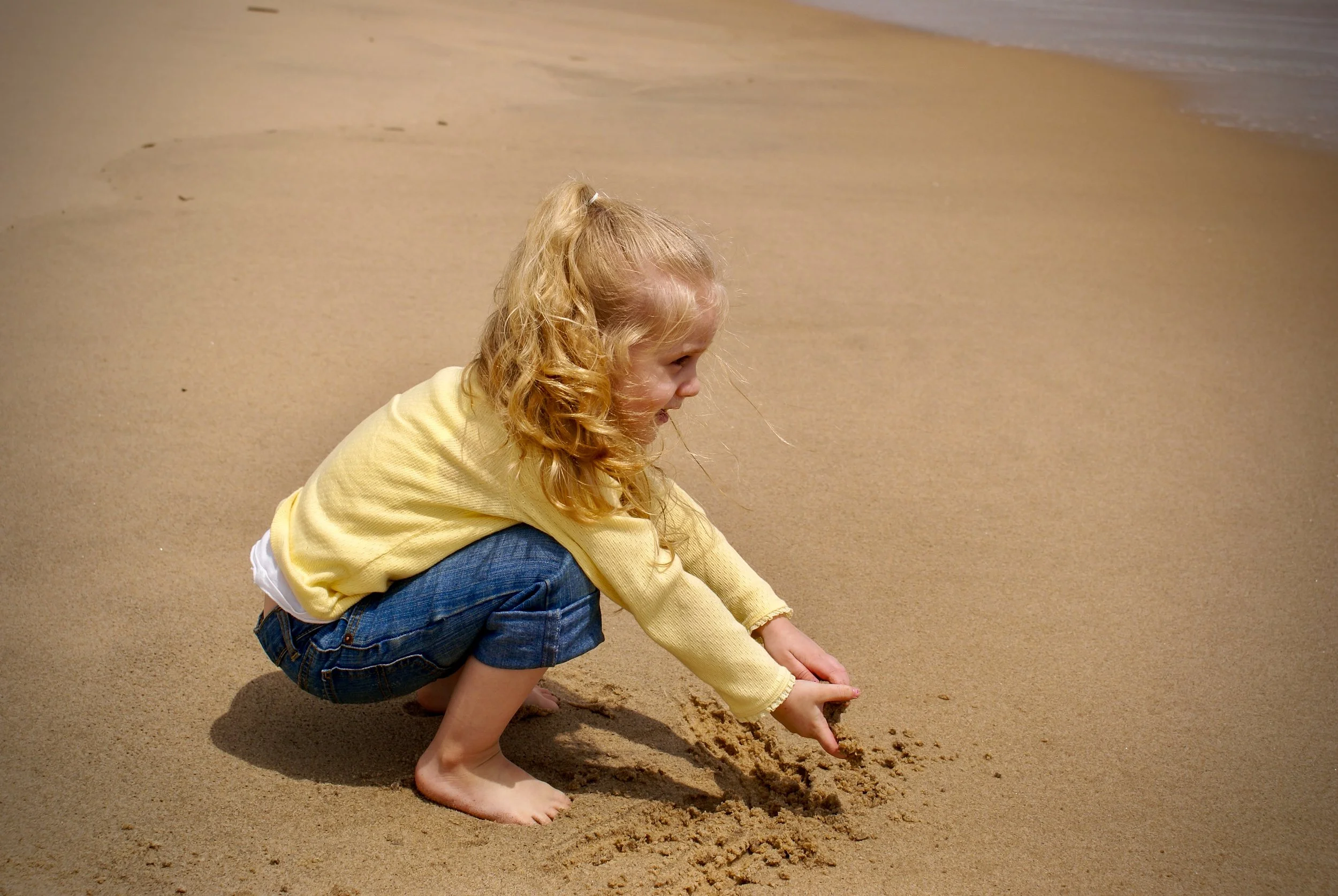
The photo at the top of this post is my daughter as a toddler, crouched in the sand, completely absorbed. She wasn't looking at me. She wasn't posing. I wouldn't trade it for a hundred smiling-at-the-lens frames.
If you've got a kid who won't sit still, you're exactly who I like photographing. Let's talk about your family.
What I Notice About a Family Before I Ever Pick Up the Camera
Before I take a single photo, I'm already paying attention.
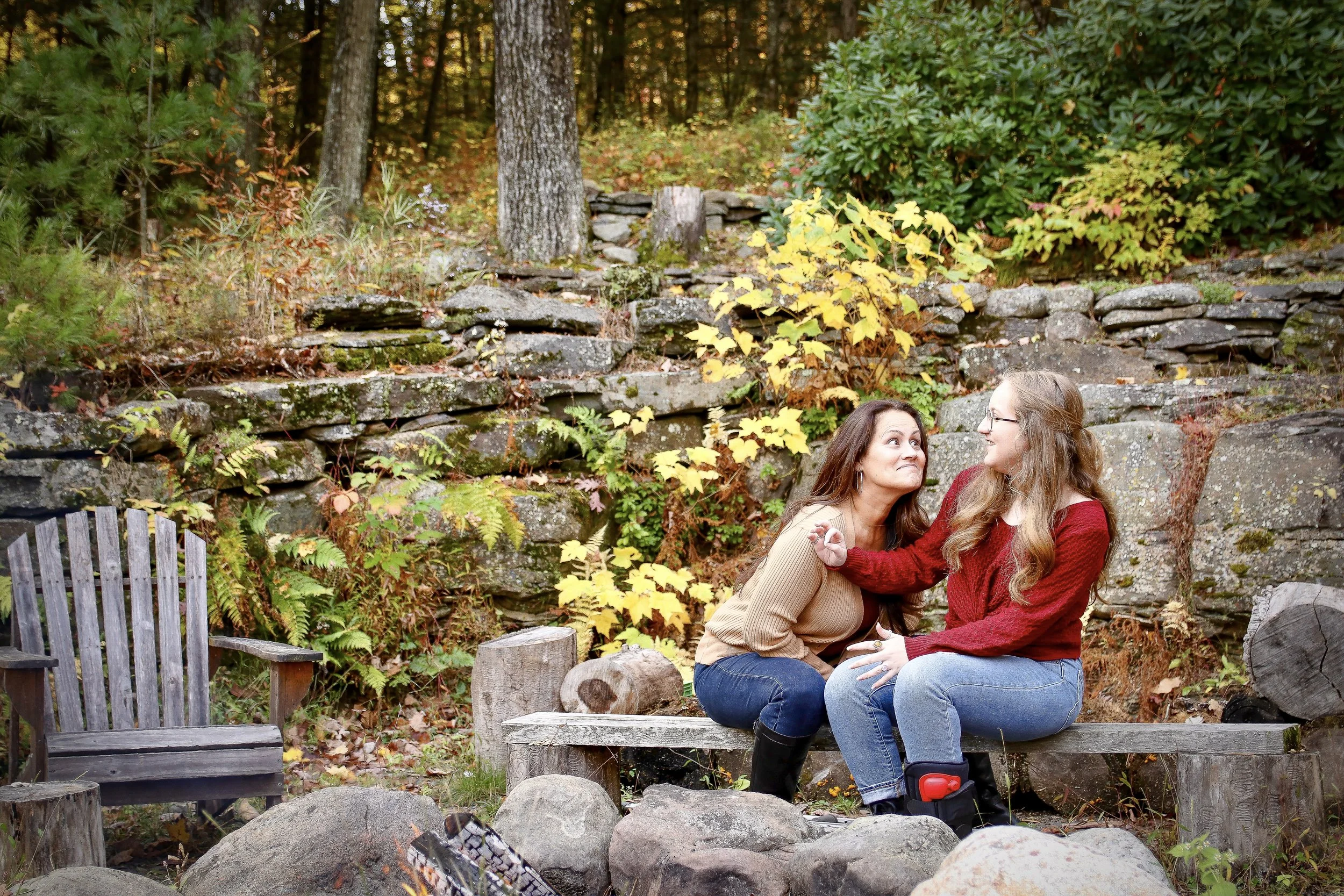
How a family greets each other when they arrive. Who's holding whose hand without thinking about it. Which kid runs ahead and which one hangs back closer to a parent. The in-jokes I don't understand yet but can tell are in-jokes, from the way everyone half-laughs before the punchline even lands.
None of that shows up in a shot list. But it shows up in the photos.
That's the part of this work people don't always expect — the camera comes out second. The noticing comes first. I'm not walking in with a plan to pose you a certain way. I'm walking in trying to understand who you actually are together, so that whatever we end up capturing looks like your family and not just "a family."
Every family has a rhythm that's entirely their own — the way they tease each other, the pace they move at, who's the planner and who's along for the ride. My job is to notice that rhythm quickly enough to work with it instead of against it.
It's a strange kind of attention — quiet, a little like eavesdropping, but with warmth behind it instead of nosiness. I'm not judging what I see. I'm just trying to learn it fast enough to help it come through in the photos.
If I've done my job right, you won't even remember the moment I started paying attention. You'll just recognize yourselves in what I hand back.
Ready for a session that actually feels like your family? Let's start the conversation.
The Photo I Almost Didn't Take
Some photos you plan. You scout the location, study the light, think about the shot before you ever lift the camera.
And then there are the ones you almost miss — because you're too busy living the moment to remember you're also the one holding the camera.
This is one of those.
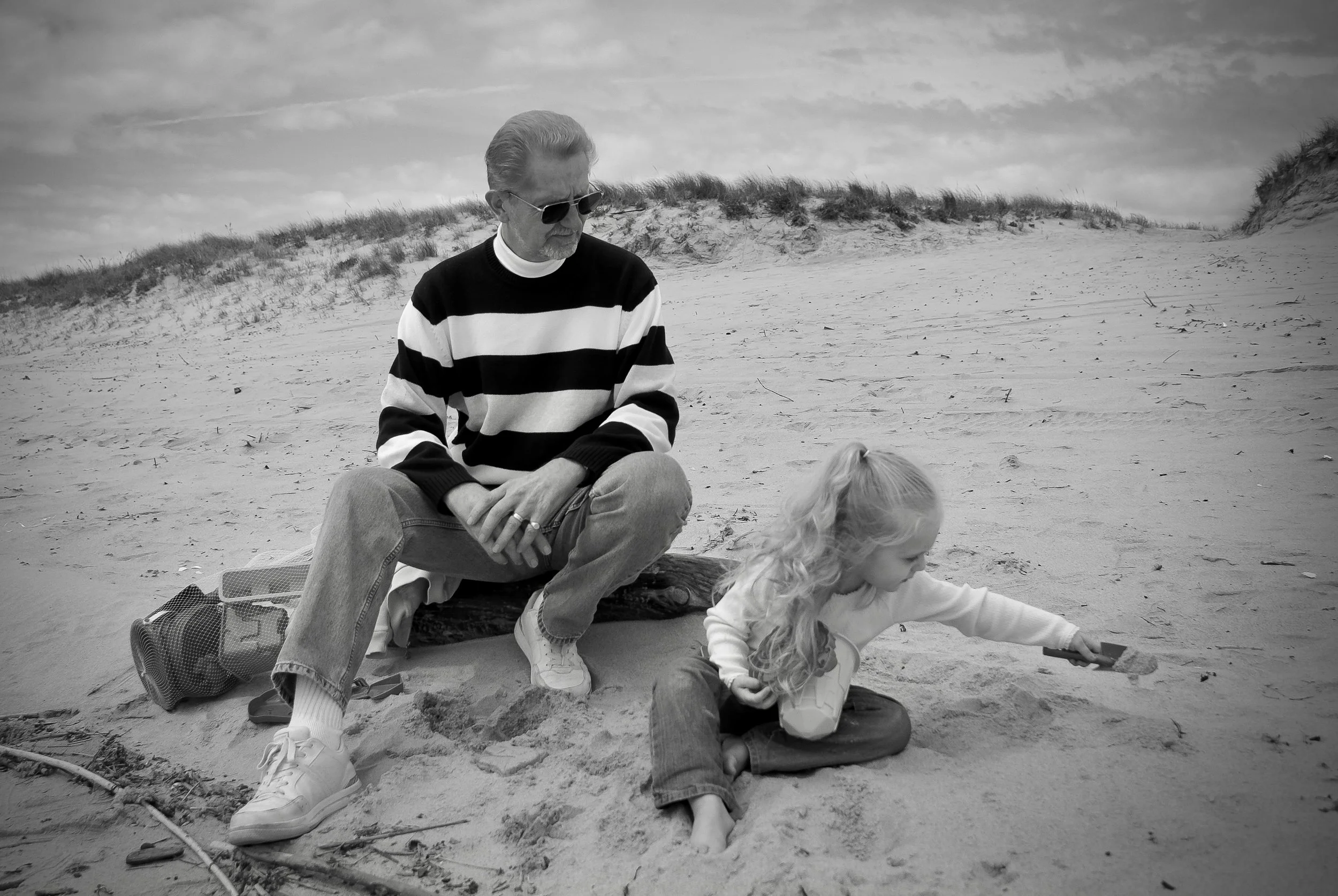
My father and my daughter, sitting together on the beach, doing nothing in particular. No one posed. No one was thinking about the photo. I just happened to have a camera in my hand, and something told me to lift it.
I didn't know, then, how much that photo would come to mean. I just knew I didn't want the moment to disappear the second it ended.
That's the part of this work people don't always think about. It's not really about the camera, or the lighting, or any of the technical things I could tell you about. It's about being the one person in the room who's paying close enough attention to catch what everyone else is too busy living to notice.
My father is gone now. That photo captures something truly special — a moment that's easy to miss entirely if you're not really looking.
That's why I do this work. Not to make things look perfect. To make sure the moments that actually matter don't just slip by unrecorded.
If there's a moment in your life you don't want to lose — I'd be honored to help you hold onto it. Let's start the conversation.